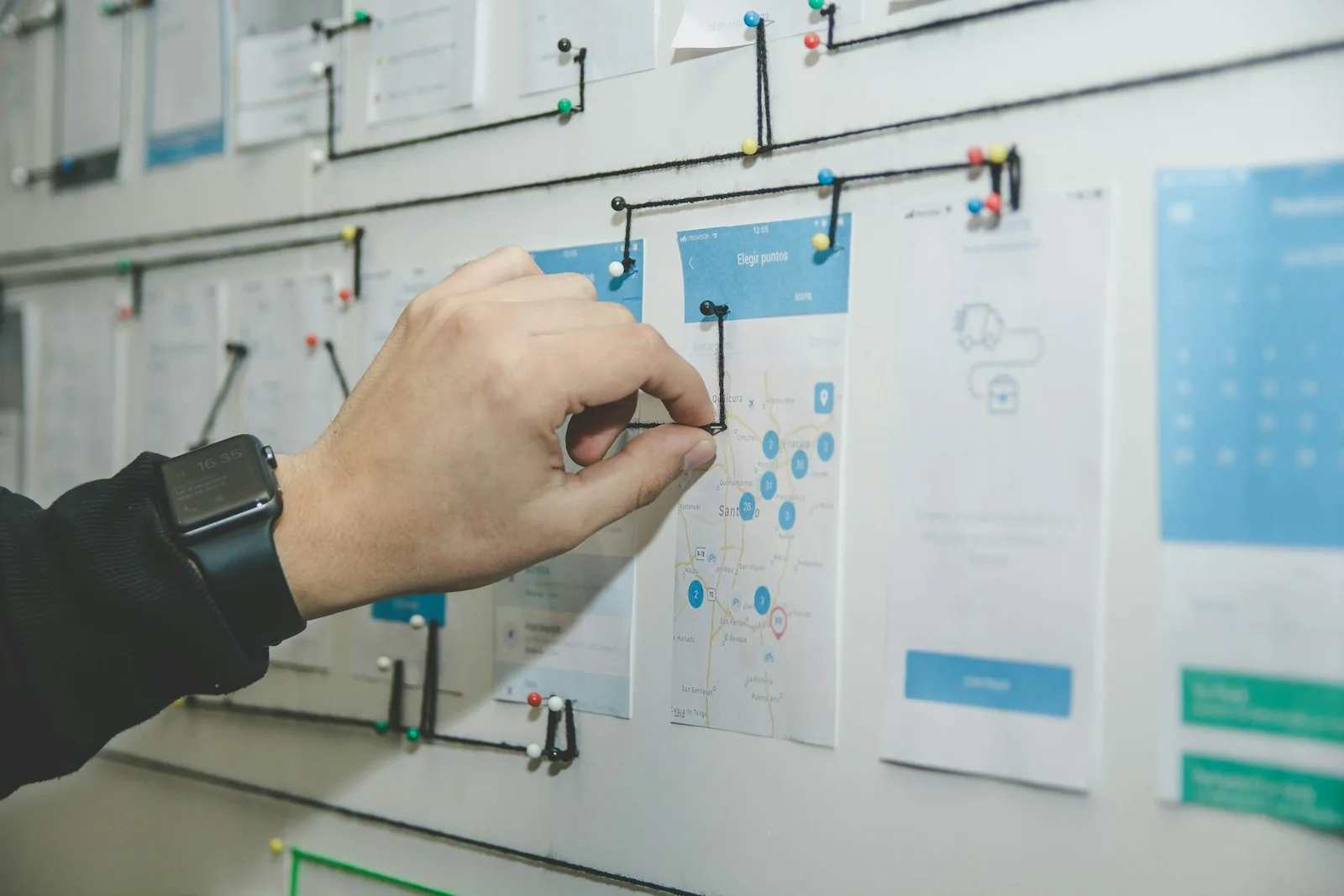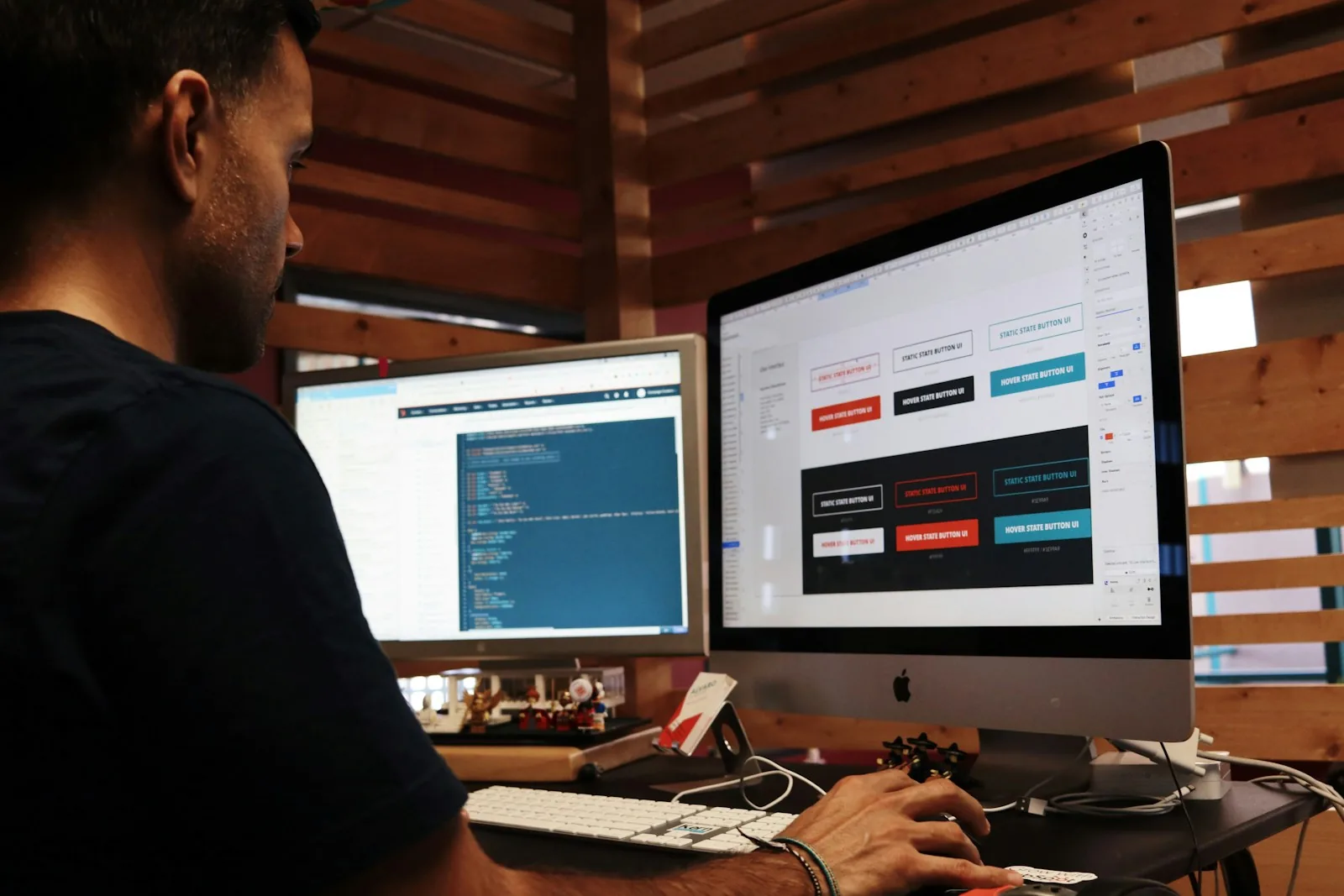
- AI workflow design identifies bottlenecks in existing processes, such as guest communication or inventory management.
- Automation blueprints integrate tools like LLMs and no-code platforms to execute tasks autonomously.
- End-to-end AI implementation in Bali typically yields a 15-30% reduction in operational expenditure.
The morning light in Canggu often brings the distant hum of scooters and the rhythmic clang of construction, a backdrop to Bali’s dynamic business environment where efficiency now takes center stage.
What is an AI workflow and how does it work for Bali businesses?
An AI workflow defines a sequence of automated tasks and decisions powered by artificial intelligence, designed to execute specific business processes with minimal human intervention, offering a significant advantage for Bali businesses navigating competitive markets. For a villa management company, this might involve an automated system that handles initial guest inquiries, processes booking confirmations, and schedules cleaning services. The core mechanism typically starts with an input trigger – perhaps a new email, a data entry in a CRM, or a scheduled time. This trigger initiates a series of AI-driven steps: an LLM (Large Language Model) like GPT-4o or Claude could analyze an email for sentiment and intent, a RAG (Retrieval Augmented Generation) system might pull relevant information from a knowledge base (e.g., villa policies, local attractions), and then an automation platform like Make or Zapier orchestrates the subsequent actions. These actions could range from sending a personalized response via a chatbot to updating a booking calendar and notifying staff via WhatsApp. The beauty of `ai workflow design bali` lies in its adaptability; it can be tailored for hospitality, logistics, e-commerce, or even creative industries prevalent in Ubud’s nomad tech scene. This structured approach to `ai implementation bali` ensures that tasks that once consumed hours of staff time – from responding to frequently asked questions to managing supplier orders – are now completed in minutes, often with greater accuracy. The objective is to create an `automation blueprint bali` that not only replicates manual processes but optimizes them, identifying patterns and making predictive adjustments. Consider a small boutique hotel with 15 rooms: an AI workflow can manage approximately 70% of routine guest communications, freeing front-desk staff to focus on high-value interactions. This translates to an estimated 20% increase in staff productivity and a reduction in response times from hours to mere seconds, directly impacting guest satisfaction scores. Effective `ai systems design bali` integrates seamlessly with existing platforms, ensuring data consistency and operational fluidity.
How do you map manual tasks into automated workflows in a Bali villa operation?
Mapping manual tasks into automated workflows within a Bali villa operation begins with a granular audit of every existing process, identifying repetitive, rule-based activities ripe for automation. For a typical Bali villa managing 10-20 properties, daily operations involve hundreds of discrete tasks: guest check-in procedures, welcome kit preparations, maintenance requests, billing inquiries, and feedback collection. The first step in `business process mapping ai bali` involves documenting each task, its inputs, outputs, decision points, and the tools currently used. For example, a guest requesting a late check-out might trigger a manual check of villa availability, communication with housekeeping, and a manual update in the booking system. An `ai workflow design bali` expert would chart this flow visually, often using tools like Miro or Lucidchart, marking human touchpoints versus potential automation points. The next phase is process simplification and standardization. Before automating, unnecessary steps are eliminated, and variations are minimized. This ensures that the AI system learns and executes a clean, efficient process. Then, specific automation points are identified:
- Inquiry Handling: A chatbot powered by an LLM (like OpenAI’s GPT models via API) can triage common questions about villa amenities, local transport distances (e.g., 5 km to Seminyak beach), or breakfast options.
- Booking Management: Integration with property management systems (PMS) allows AI to automatically update availability based on confirmed bookings, send pre-arrival information, and trigger payment reminders.
- Maintenance Scheduling: Guest reports of issues (e.g., a broken AC unit, a 2-hour fix) can be parsed by AI, categorized, and automatically assigned to the relevant maintenance team member via a task management system, with an estimated response time of 30 minutes.
- Guest Feedback: Post-stay emails can be sent automatically, and AI can analyze sentiment from responses, flagging critical feedback for human review.
This meticulous `workflow automation consultant bali` approach typically reduces manual data entry by 40% and accelerates response times by 80%, providing a tangible return on investment for villa operators. The process demands a clear understanding of both the operational nuances and the technical capabilities of AI, ensuring that the automated system truly enhances, rather than complicates, the guest experience and staff productivity.
What tools are best for visual workflow design with AI in Bali?
For visual workflow design with AI in Bali, a combination of diagramming software for conceptualization and no-code/low-code automation platforms for implementation offers the most flexibility and power. Initially, for `ai workflow design bali` conceptualization and `automation blueprint bali` creation, tools like Miro, Lucidchart, or even simpler options like diagrams.net (formerly draw.io) are invaluable. These platforms allow teams to visually map out existing processes, identify bottlenecks, and design the future state of an AI-powered workflow using drag-and-drop interfaces, swimlanes, and standardized flowchart symbols. They facilitate collaborative brainstorming sessions, crucial for ensuring all stakeholders – from villa managers to marketing teams – understand the proposed `ai systems design bali`. Once the conceptual design is solid, the transition moves to practical implementation using robust no-code/low-code platforms that integrate deeply with AI services.
- Make (formerly Integromat): This platform excels in complex, multi-step automations. Its visual builder allows users to connect hundreds of apps and services, including direct integrations with OpenAI API for natural language processing, Google Sheets for data management, and various CRM/PMS systems. It’s highly flexible for intricate `ai implementation bali`, allowing for conditional logic, iterators, and error handling.
- n8n: An open-source alternative, n8n offers similar visual workflow capabilities to Make but provides the advantage of self-hosting, which can be critical for data privacy concerns or specific infrastructure requirements of some Bali businesses. It supports a vast array of integrations and allows for custom code execution, making it powerful for `end to end ai implementation bali` where unique API connections are needed.
- Zapier: While often simpler, Zapier is excellent for connecting two or three applications quickly and efficiently. For smaller businesses or specific, less complex `ai process optimization bali` tasks (e.g., sending an automated email notification when a new lead enters a spreadsheet, then adding them to a CRM), Zapier’s ease of use is unparalleled. It also offers AI actions through integrations with tools like ChatGPT.
- ChatGPT/Claude (via API): These LLMs are not visual workflow tools themselves but are critical components within the automation platforms. They provide the “intelligence” for tasks like text summarization, content generation, data extraction, sentiment analysis, and dynamic response generation, all integrated into the visual flows designed in Make, n8n, or Zapier.
Choosing the right tool depends on the complexity of the workflow, budget, technical expertise of the team, and specific integration needs. A typical small to medium-sized enterprise in Bali might invest $200-$500 USD per month (3,000,000 – 7,500,000 IDR) on such platforms, yielding significant returns through efficiency gains. For example, Make’s pricing tiers offer scalable solutions, with basic plans starting around $9 USD/month for limited operations, scaling up to hundreds for enterprise-level usage, while Zapier’s professional plans start at $39 USD/month. These tools empower `ai consulting bali` firms to deliver sophisticated solutions without extensive custom coding, accelerating deployment timelines. For more details on Large Language Models, refer to Wikipedia’s LLM overview.
The Strategic Imperative of AI Process Optimization in Bali
The strategic imperative of `ai process optimization bali` extends beyond mere task automation; it involves fundamentally rethinking how businesses operate to achieve sustainable growth and competitive advantage in a rapidly evolving global economy. For businesses operating on the island, from boutique hotels to logistics providers distributing goods across the archipelago, manual processes often lead to inefficiencies, inconsistencies, and high operational costs. A lack of standardized procedures can result in errors in booking confirmations, delayed responses to customer inquiries, or mismanaged inventory, directly impacting profitability and brand reputation. `AI workflow design bali` addresses these pain points by creating intelligent, adaptive systems. For instance, an AI-powered demand forecasting system can analyze historical booking data, local event calendars (e.g., Nyepi dates, school holidays), and even weather patterns to predict occupancy rates for a Kuta resort with 150 rooms, allowing for optimized staffing and dynamic pricing adjustments. This proactive approach minimizes wasted resources and maximizes revenue potential. Similarly, in supply chain management, AI can monitor stock levels of essential villa supplies (e.g., linens, toiletries), automatically reordering when thresholds are met, and even comparing prices from multiple local suppliers (e.g., a 10% price difference between two Denpasar distributors) to ensure cost-effectiveness. The `end to end ai implementation bali` process often uncovers opportunities for innovation that were previously obscured by manual overhead. By offloading repetitive tasks to AI, human capital can be redirected to creative problem-solving, strategic planning, and enhancing personalized customer experiences. This shift is particularly vital in Bali’s service-oriented economy, where genuine human interaction remains a cornerstone of its appeal. The `automation blueprint bali` developed by `ai consulting bali` experts ensures that these optimizations are not piecemeal but form a cohesive, integrated system that drives holistic business improvement. It’s about building a future-proof operational framework that can scale with demand and adapt to market changes, providing a resilient foundation for any enterprise.
How long does an AI implementation project usually take in Bali?
An AI implementation project in Bali typically spans anywhere from 3 to 9 months, depending on the complexity of the workflows, the scope of the integration, and the readiness of the client’s existing data infrastructure. For a relatively straightforward `ai implementation bali` project, such as automating guest inquiry responses for a small villa managing 5 properties, the initial discovery and `ai workflow design bali` phase might take 2-4 weeks. This involves detailed `business process mapping ai bali` to understand current pain points and define the desired automated outcomes. The development and testing phase, where tools like Make or n8n are configured and integrated with existing systems (e.g., a property management system or WhatsApp Business API), could then take 1-2 months. Finally, deployment, training, and a stabilization period would add another 2-4 weeks. This would place a simple project at the lower end of the 3-month estimate.
However, for more complex `end to end ai implementation bali` projects involving multiple departments of a larger hotel group (e.g., 100+ rooms), integrating with several legacy systems, and implementing advanced AI functionalities like predictive analytics or personalized marketing campaigns, the timeline extends significantly.
- Discovery & Strategy: 4-8 weeks. Comprehensive audit, stakeholder interviews, `automation blueprint bali` development.
- Data Preparation & Integration: 6-12 weeks. Cleaning, structuring, and migrating data; setting up APIs and connectors.
- AI Model Development & Configuration: 8-16 weeks. Training custom LLMs (if needed), configuring automation platforms, building custom logic. For instance, fine-tuning an LLM for specific Balinese cultural nuances in communication might add 2-4 weeks.
- Testing & Iteration: 4-8 weeks. Rigorous testing in a sandbox environment, gathering feedback, refining workflows.
- Deployment & Training: 2-4 weeks. Go-live, staff training, handover documentation.
- Post-Implementation Support & Optimization: Ongoing, but initial stabilization typically 1-2 months.
A full-scale `ai systems design bali` project for a multi-property hospitality group, aiming for comprehensive `ai process optimization bali`, could easily extend to 6-9 months. The total cost for such projects can range from $15,000 USD (approximately 225,000,000 IDR) for simpler solutions up to $75,000 USD (approximately 1,125,000,000 IDR) or more for enterprise-level deployments, with ongoing software subscriptions and maintenance costs. The upfront investment, however, often pays for itself within 12-18 months through significant operational savings and improved customer experiences. Understanding the capabilities of large language models is key to scope definition; explore more at OpenAI Research or Anthropic Research. Our `workflow automation consultant bali` team provides transparent timelines and cost estimates tailored to specific business needs.
From Manual Limitations to AI-Driven Agility
Transitioning from manual limitations to AI-driven agility represents a pivotal shift for businesses operating within Bali’s vibrant economy, transforming how services are delivered and operations are managed. The island’s unique blend of traditional practices and modern enterprise creates an environment where efficiency gains from `ai consulting bali` can have a profound impact. Imagine a scenario where a small e-commerce venture in Denpasar, selling artisanal crafts, spends 3 hours daily manually processing orders, updating inventory, and responding to customer queries. With an `end to end ai implementation bali`, these tasks can be reduced to under 30 minutes. An AI workflow might automatically process new orders from various channels, update stock